

Beyond the Blue Summer Program
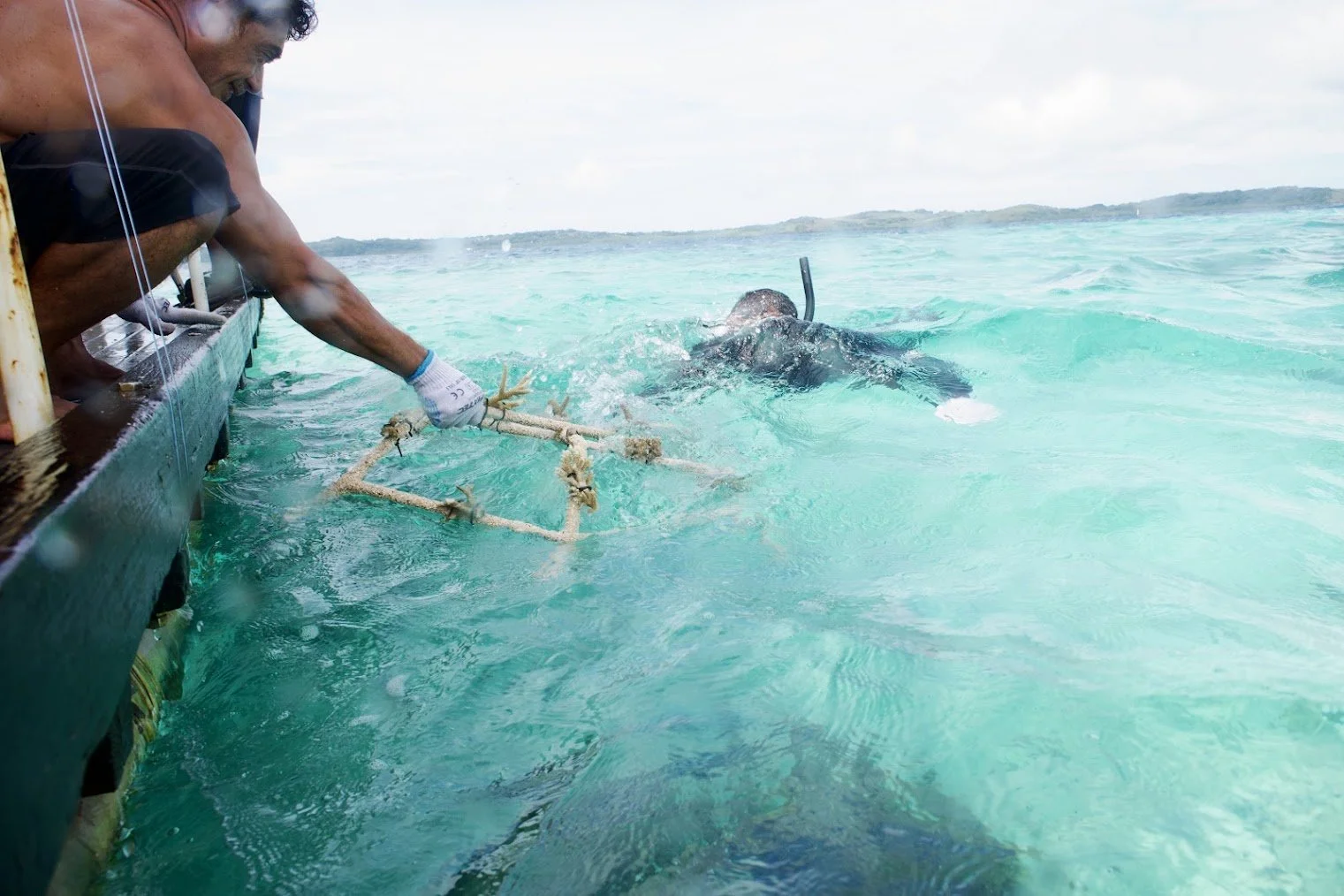
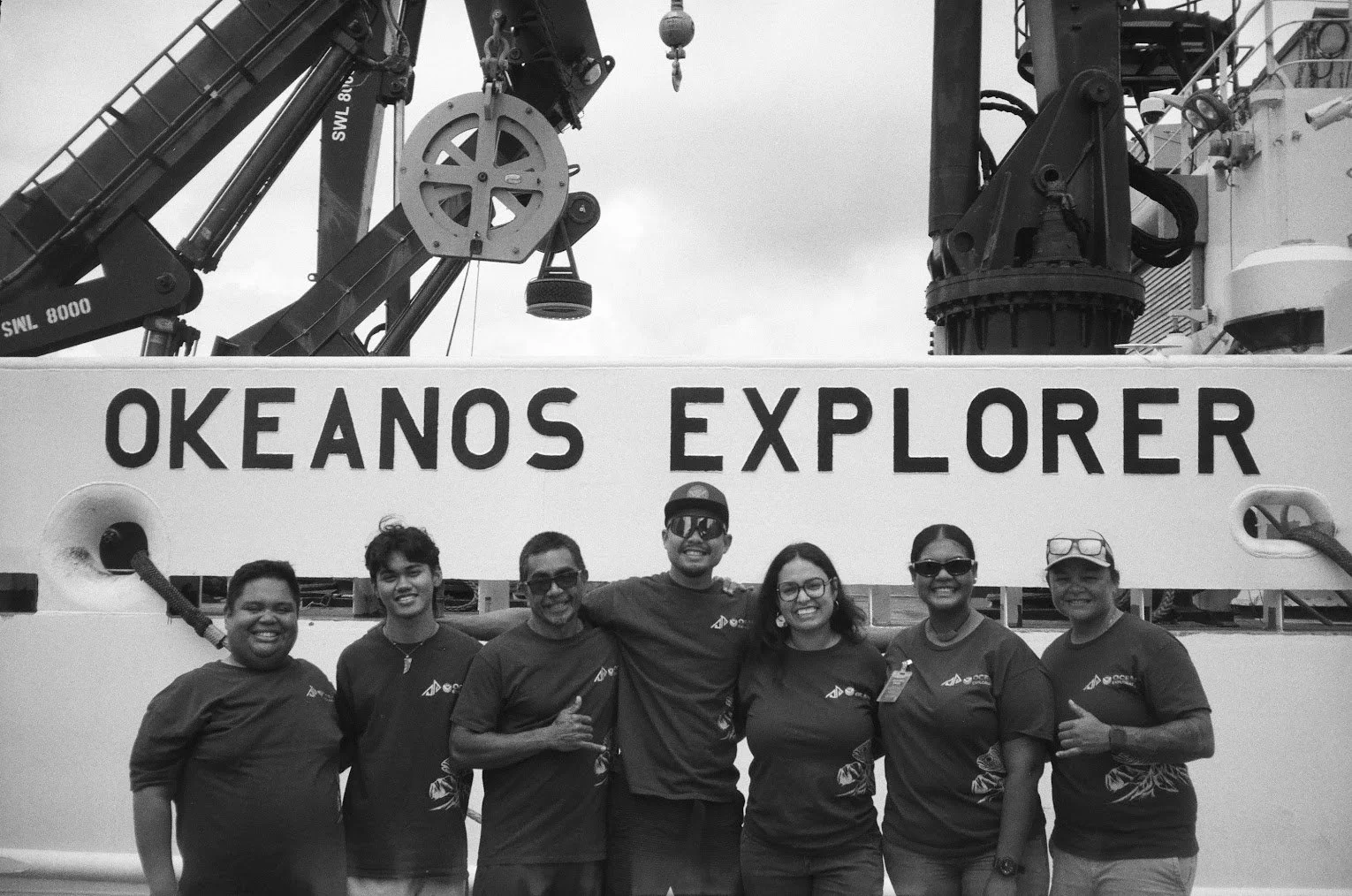
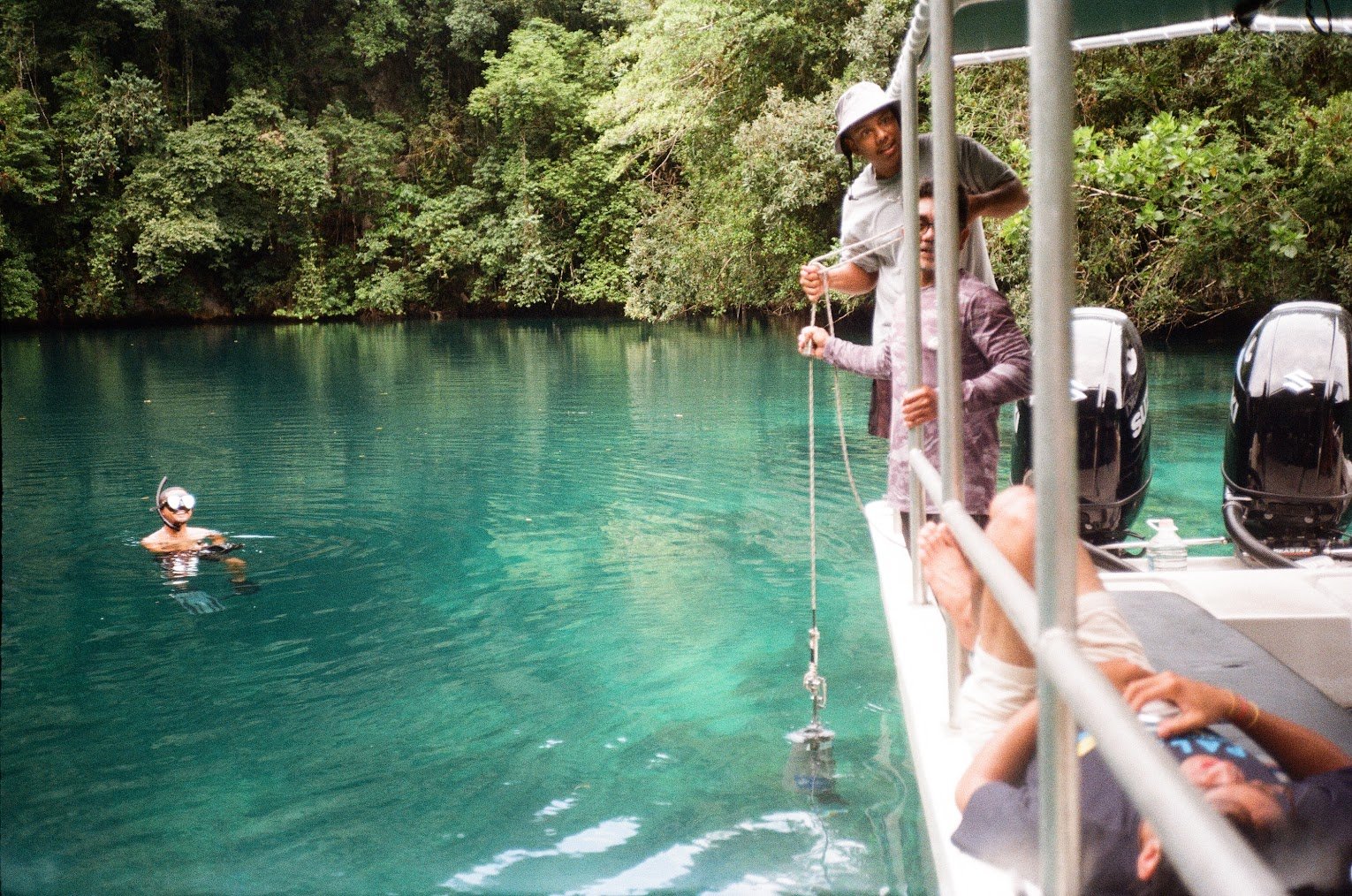
In the summer of 2025, I had the amazing opportunity to be a part of a collaborative effort between the National Oceanic and Atmospheric Administration (NOAA) and the Palau International Coral Reef Center (PICRC) as a Junior Regional Advisor. During the summer, I worked partially at the PICRC and the Aquarium, participating in marine biology work such as coral planting, environmental DNA collection and filtration, and even science communication through outreach. Another portion of the summer was spent as a Palauan liaison and guest scientist aboard the NOAA Ship, Okeanos Explorer. During our time on the Okeanos Explorer, we conducted environmental DNA collection and filtration, assisted in the mapping of the seafloor of Palau’s Exclusive Economic Zone (EEZ) and conducted research and wrote papers on previous data collected in the area by Ocean Exploration Trust’s E/V Nautilus.
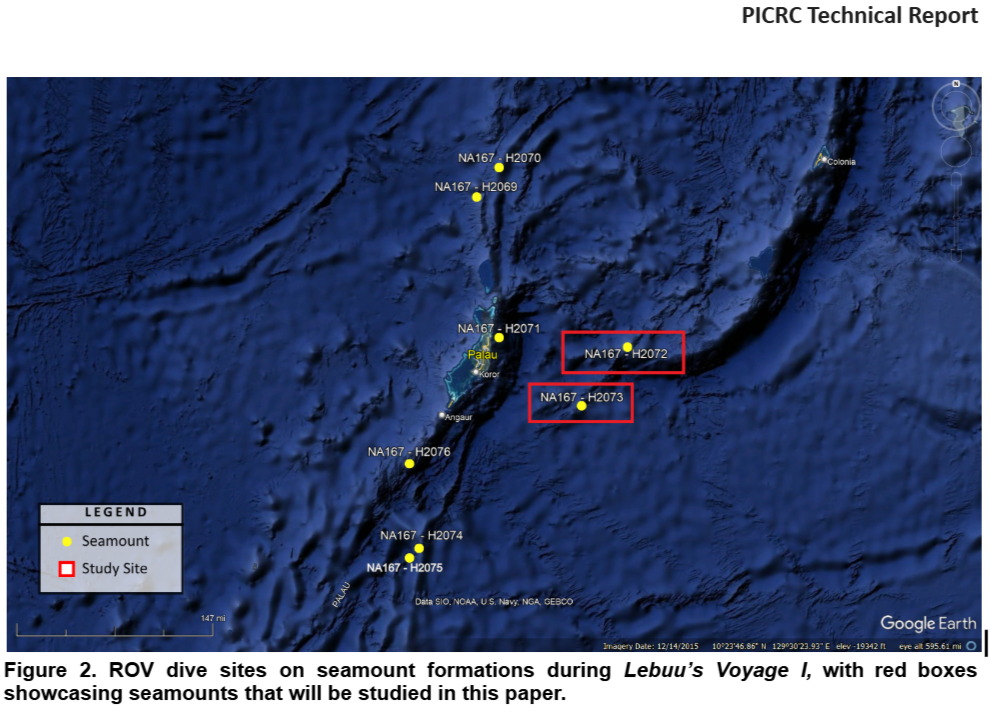
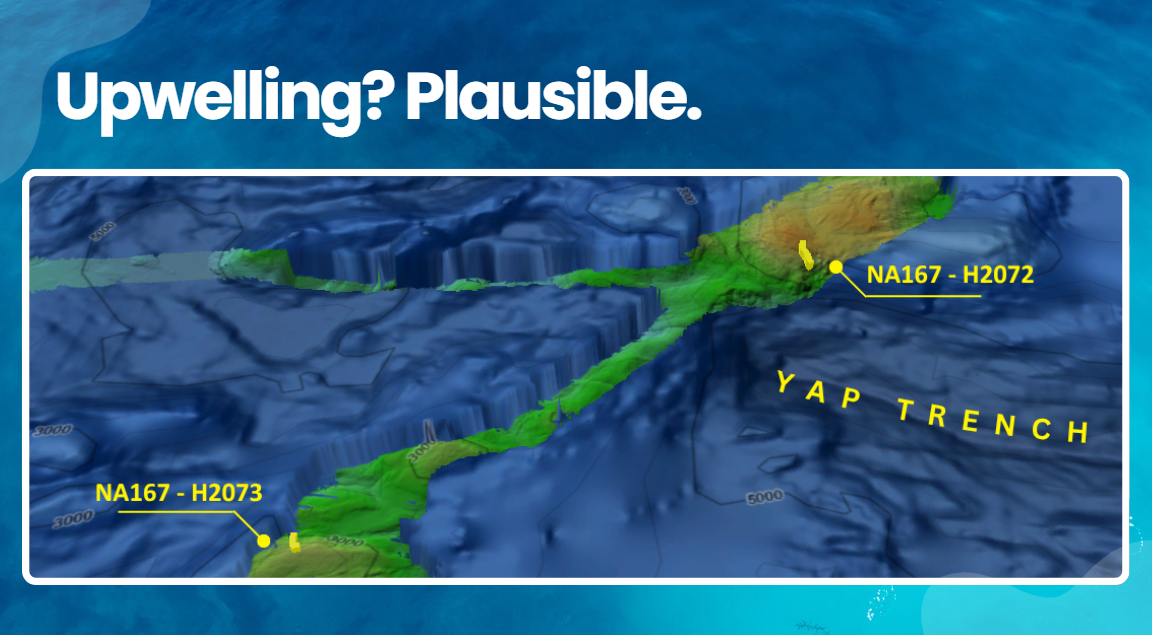
My research paper focused on comparing life found on two seamounts explored by E/V Nautilus Remotely Operated Vehicle (ROV), Hercules. I chose the two seamounts because they were relatively closer to one another and because their had closer similarities in elevation gain as compared to the other seamounts studied. My curiosity was peaked when I discovered early on that despite the similarities, one seamount had twice as much species than the other. Using ArcGIS Pro and Fledermaus I was able to create 3D models of the chosen seamounts along with the ROV track lines to discover where most of the species were found and what particular species were found at what depths.
My findings concluded that an abundance of species was found on NA167-H2072 as compared to its counterpart simply because of species temperature preference. Most species found on NA167-H2073 were not found as abundantly on H2072 simply because they seem to prefer deeper colder waters. As for the abundance of species on H2072, they had a larger temperature range and seemed to congregate throughout the seamount. Despite these trends, there is still much research that needs to be conducted. These sightings were only made after one ROV dive and there is a chance that many other species were not captured. Another theory I was curious about was upwelling from the Yap Trench which could potentially have brought more nutrient rich waters to H2072, contributing to its mass species detection, however, more data such as chlorophyll collection and sea surface temperature is needed in order to make these conclusions— both of which were not collected during the ROV dives.
Our Islands’ Flame Art Exhibition
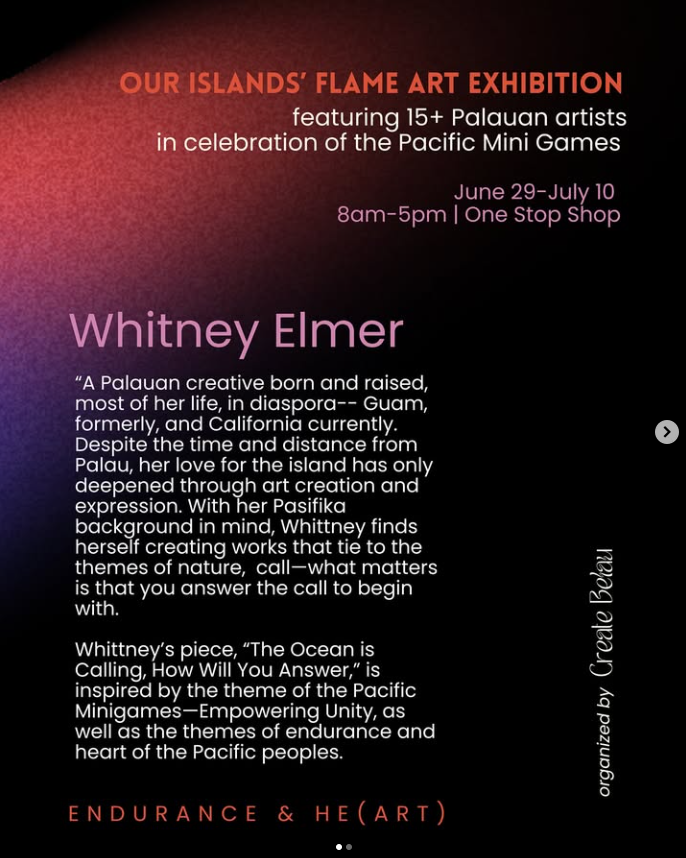
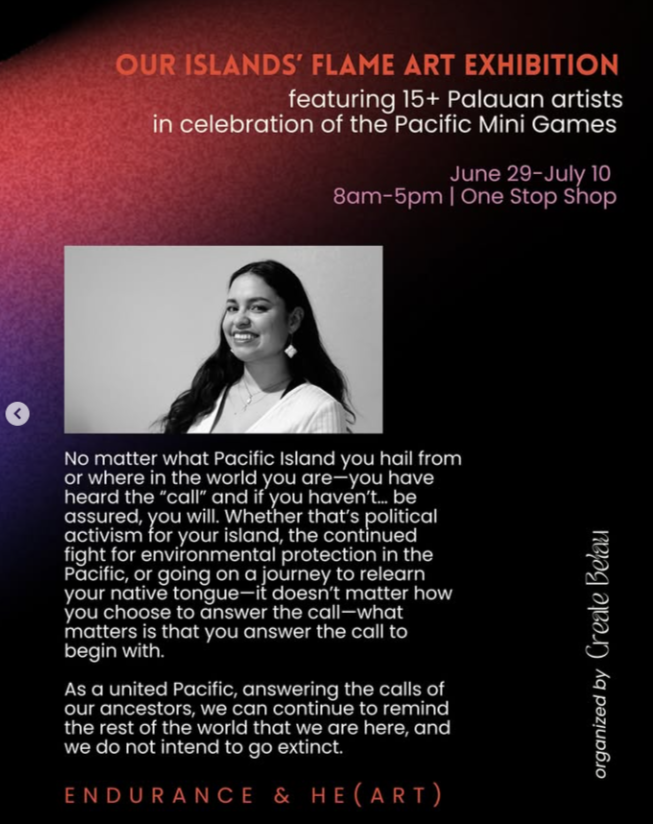
In the summer of 2025, Palau hosted the Pacific Mini Games. The Mini Games are a miniature version of the Olympics hosted and coordinated by and between the Pacific Island nations. As the host nation, Palau held an art exhibition through the Create Belau organization.
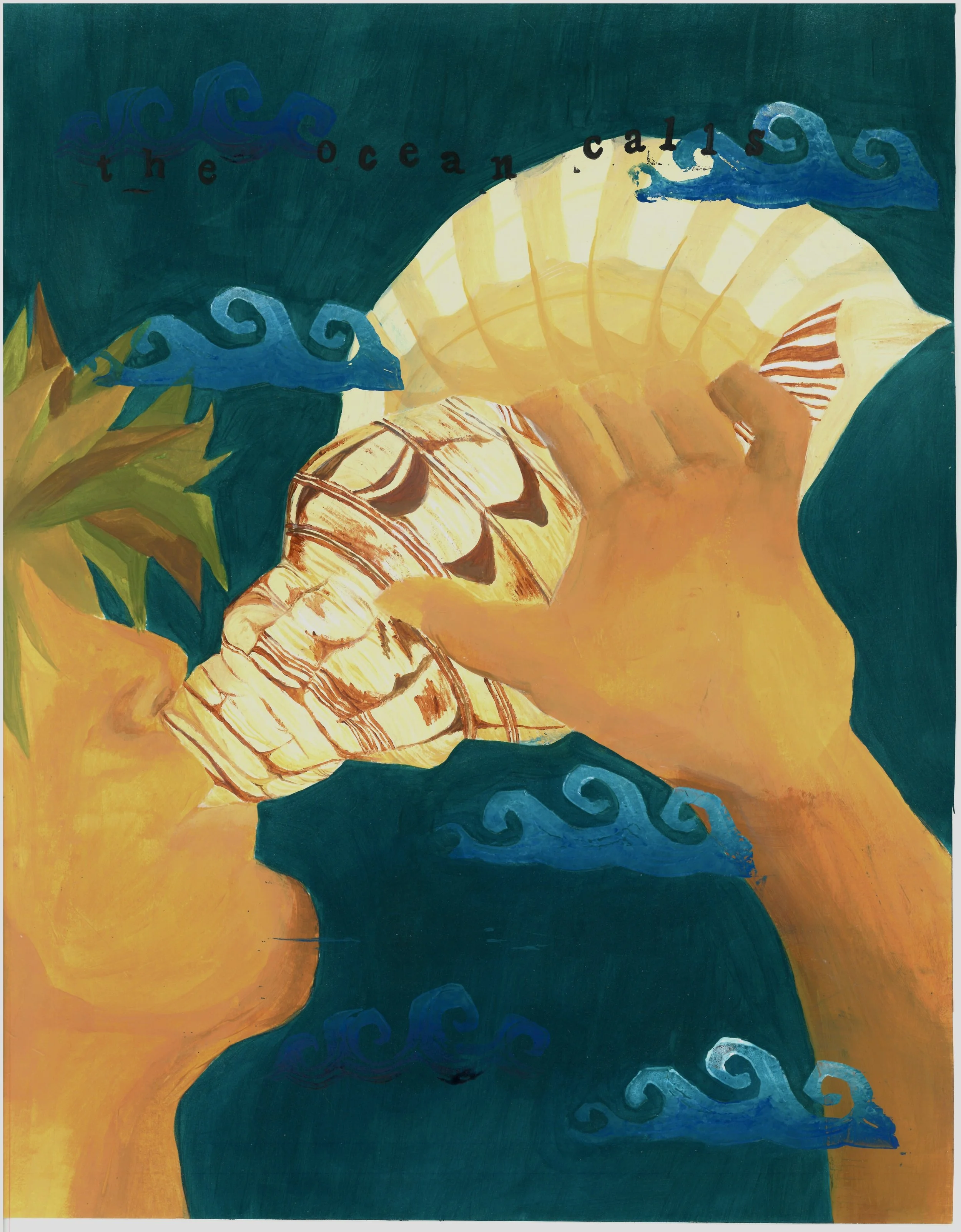
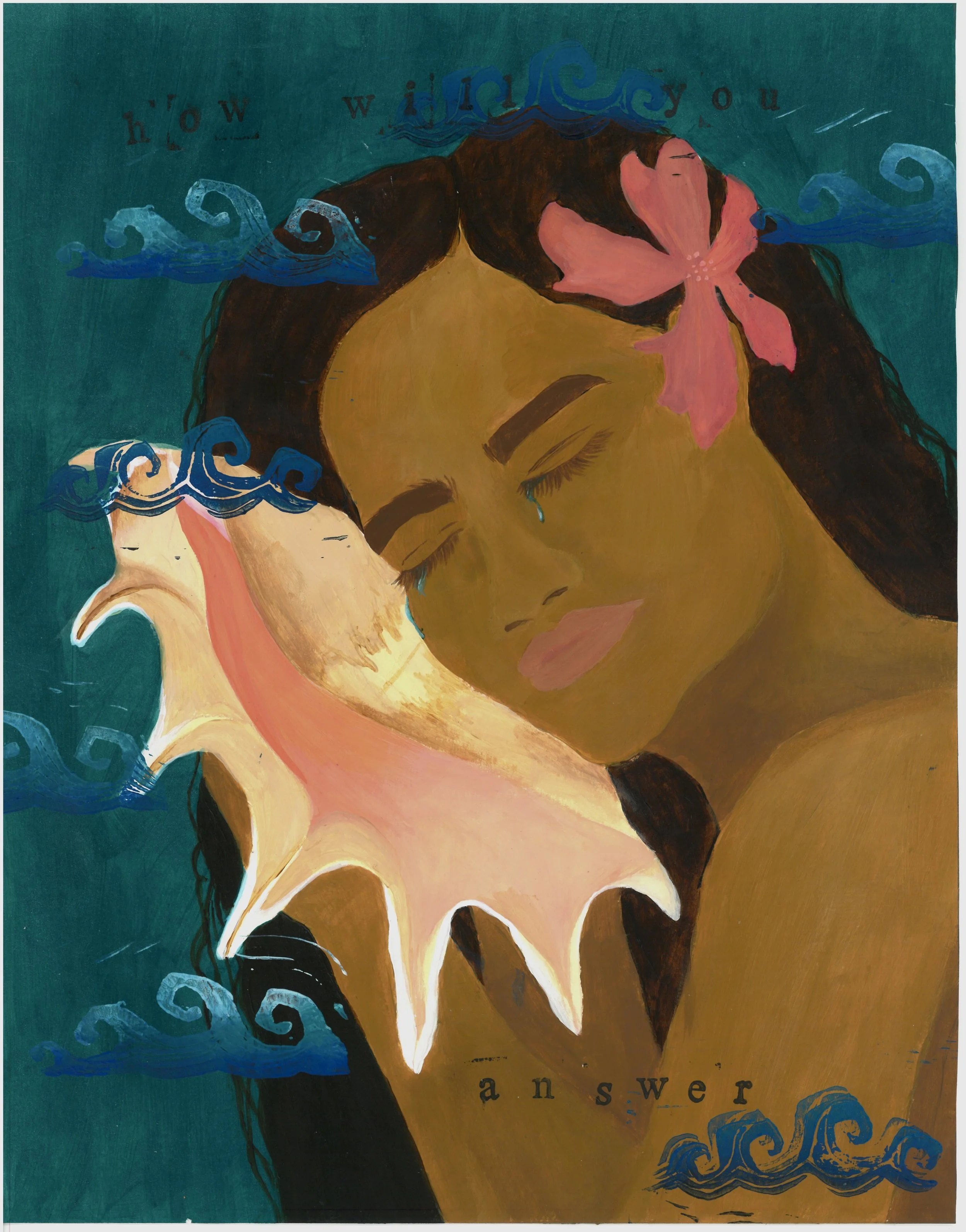
The artwork to the right, “The Ocean Calls, How Will You Answer,” was presented in the Our Islands’ Flame Art Exhibition. The piece explores the “call” that many Pasifika people will hear or rather, feel, in their lifetime. A call to find their way back home or at the least, study their genealogy.
The piece also asks Pasifika people how will they respond to their calling. How will you respond when Oceania needs you?
Substack Blog
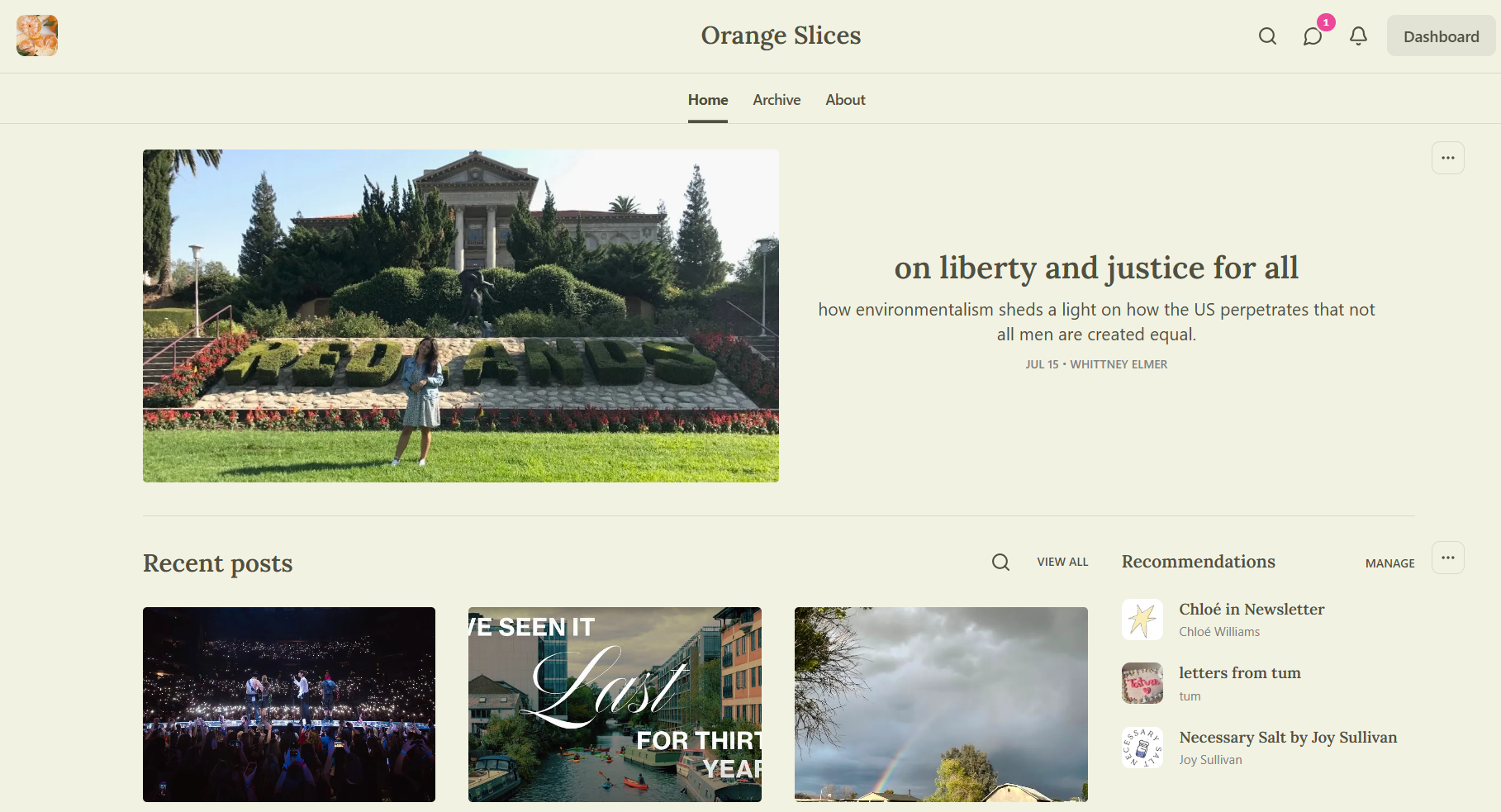
Coined “Orange Slices” after the Wendy Cope poem, I created a Substack to write on my musings about the little joys and tribulations of life. My writing focuses more on narrative styling and showcases my thoughts and ideas on issues and events in my life rather than fictional or academic writing.
Palauan Voices in Ocean Exploration Fellowship
This fellowship was made possible through Nautilus Ocean Exploration Trust and the Palau International Coral Reef Center, with funding from National Geographic. The fellowship explored the Science Communication field and how we can use creative tactics such as photography and videography to talk about larger scale scientific discoveries to non-science audiences.
For my fellowship project, I wanted to dive into film and oral storytelling to talk about how imbedded local traditions are to marine ecology. The short video I created looks at how Palauan culture and attitudes towards the ocean and to other human beings have been impacted by Palauan legends that have been orally passed down through generations.
The Palauan legend of the moral eels and their ability to work together to hunt reminds Palauans of the powerful ways in which cooperation can allow for all people to excel.


Custom Pet Portraits
Back in 2021, while volunteering at Yucaipa Animal Placement shelter, I created my first digital art of a pet portrait in a effort to fundraise for the shelter. In Dec. of 2023, I rediscovered a passion for it as I created custom pet portraits for family as a Christmas gift and it then turned to a personal project as I sold portraits to coworkers and other family and friends.
ArcGIS StoryMaps
ArcGIS Storymaps is Esri’s storytelling platform that combines narrative, imagery, and maps to build a cohesive digital story for all uses. Throughout my career at Esri, I have been lucky enough to learn about the application and have used it to create Storymaps ranging from personal use, customer use, sharing of information between our department, and even used it back at University for a course on marine mammals.

*Please note that if the content is unavailable that is because the Storymap is intended for an external customer and is not to be shared with the public.

Yucaipa Animal Placement Shelter Social Media
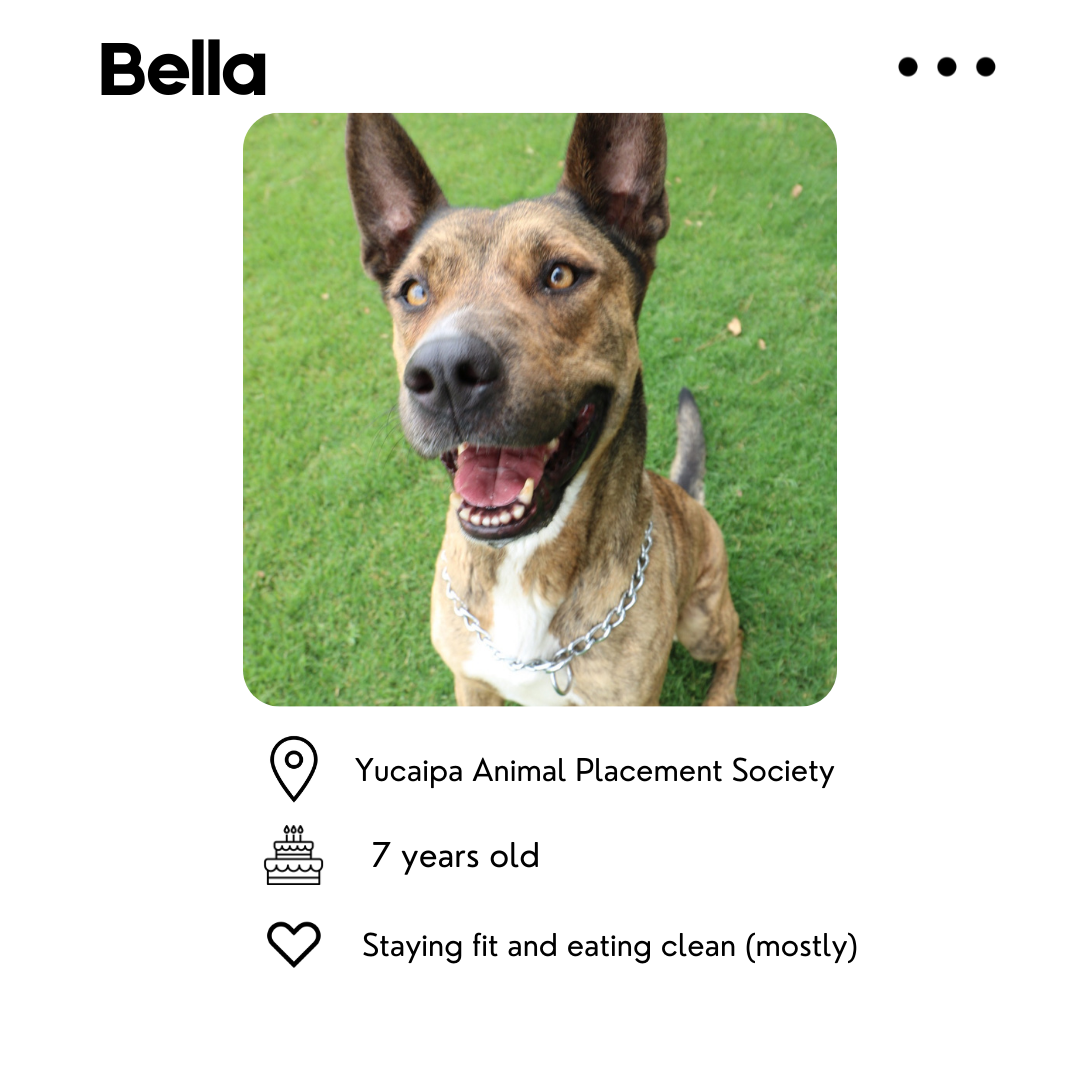
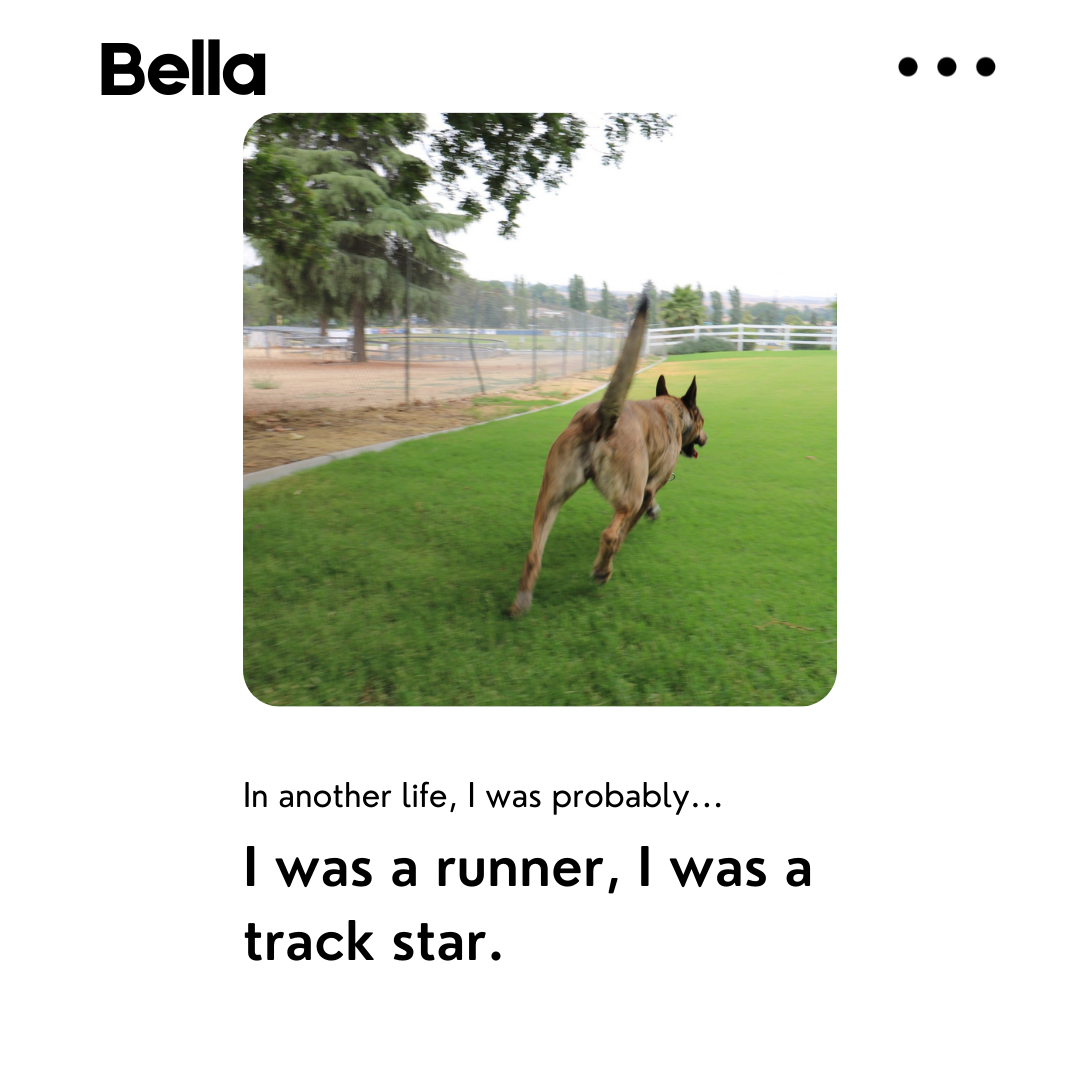
During my time volunteering with the Yucaipa Animal Placement Shelter, I was in charge of photographing the pets at the shelter and the YAPS social medias’ posts. This was such a fun project for me because I was able to come up with a creative social media strategy to “market” the shelter’s dogs to potential adopters by showcasing them as if they were potential partners on the dating app Hinge. Much like Hinge, the dogs were showed off through photographs and answers to prompts that showcased their personality traits and quirks. The example shows Bella, a mixed breed dog that was well known for her high energy and Olympic-worthy sprinting. The hope was that people who led active lifestyles or were of high mobility and energy would be able to take in Bella rather than someone who was elderly, lacked mobility, or led an inactive life.
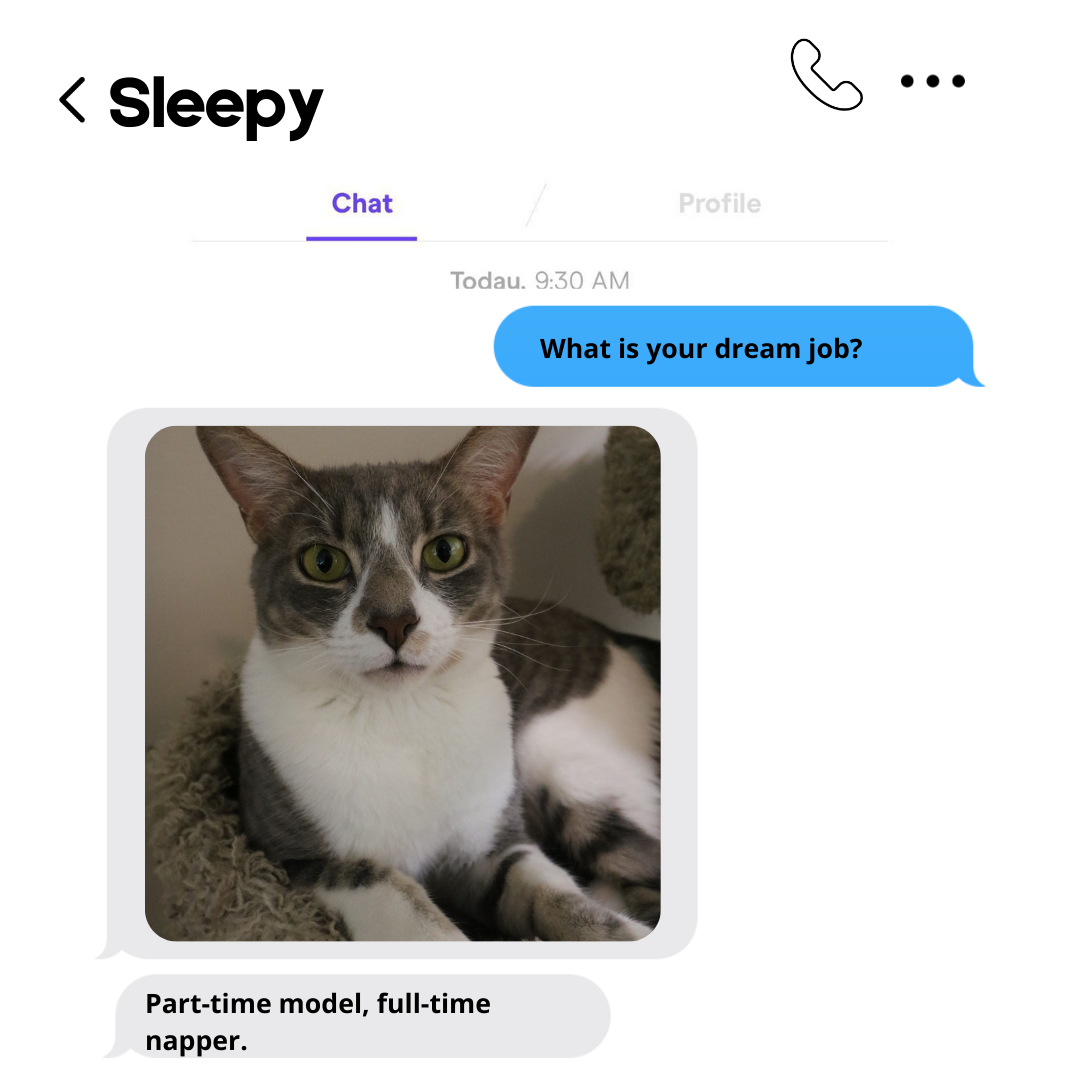
While the dogs had what I like to call “Doggies Dating Profiles” the cats at the shelter had what I called “Cat Chats.” The Cat Chats were modeled after Hinge’s chat feature. Once you “match” with a potential partner the hope was that you would continue getting to know them via chat. The Cat Chats showcased the shelter’s cats through photographs and prompts as if a potential adopter were getting to know them. The examples shown are showing Pop-Tart, who was known for her friendly demeanor— she befriended everyone who passed through the shelter and Sleepy who much like his namesake could always be found napping.

Marine Mammal Outreach and Education Assignments
Marine Mammal Ecology
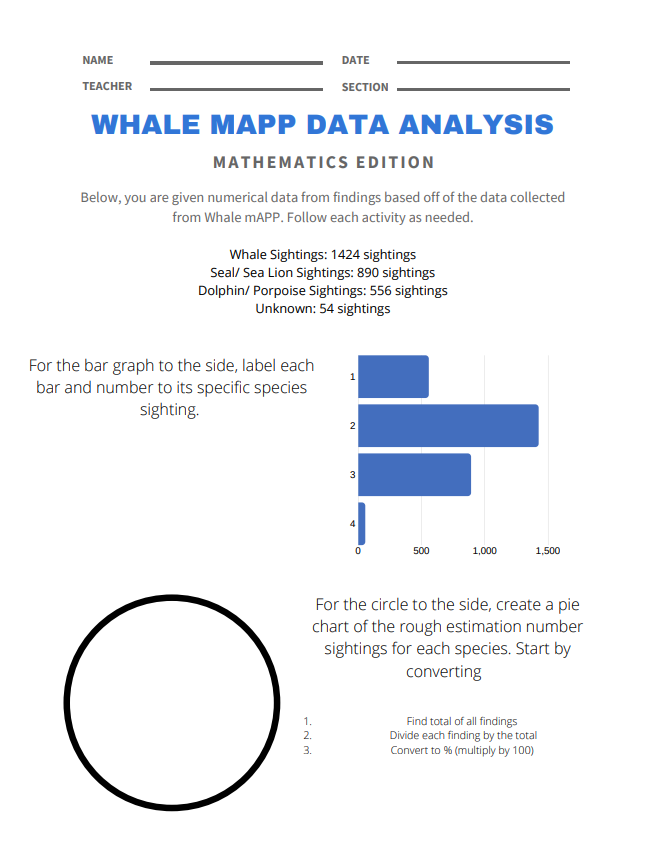
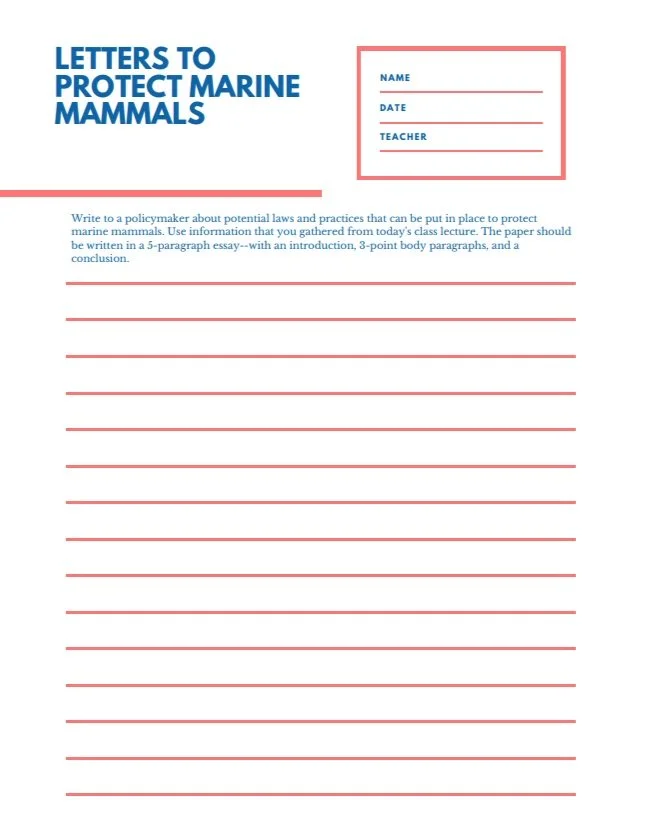
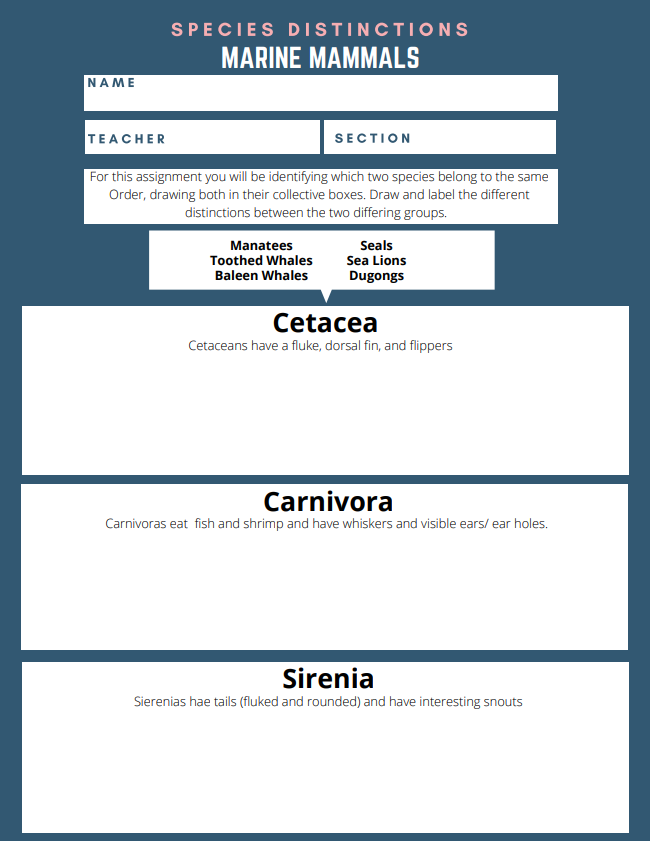
In May of 2020, I took a Marine Mammal Ecology course that focused on all things marine mammals. For the course we has to create educational content about marine mammals, ranging from ArcGIS StoryMaps to a course curriculum for K-12 students. To the bottom left you can see a StoryMap that I created with a peer and below is a screenshot of an educational PowerPoint I created alongside supplemental worksheets for the areas of math, writing, and art.


Senior Capstone
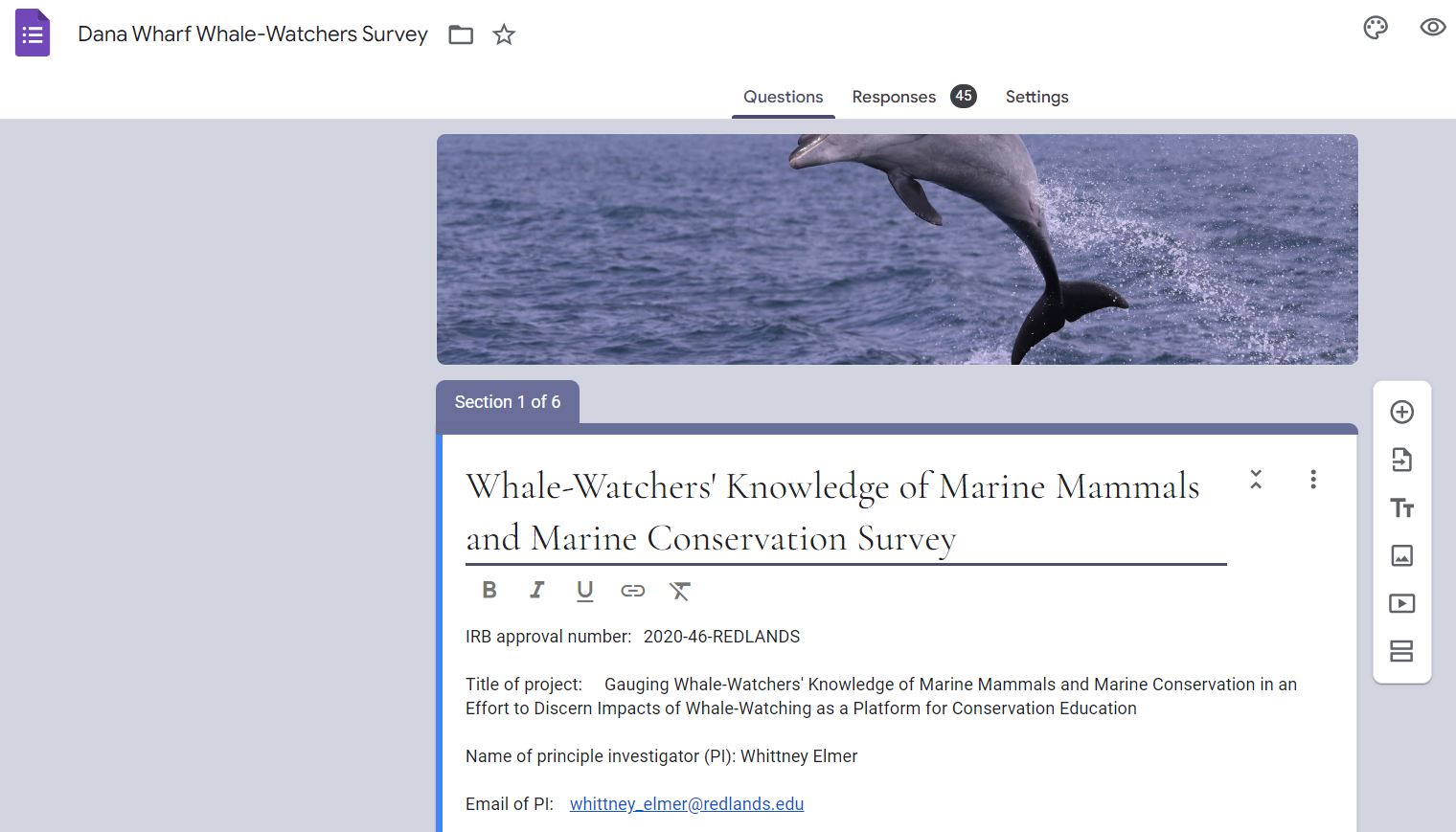
For my senior capstone, I worked at looking at the value of in-person nature experiences and how they can contribute to exciting and engaging non-traditional science learners. Posters such as this to the right were posted on boats and any passengers were encouraged to partake in the survey. All survey answers were then collected via Google Forms and I later used the data to perform statistical analysis on whether or not there has been a change in knowledge prior and after the whale watching excursion. My data did find that there was a positive change in knowledge but not enough to be extremely beneficial. Further improvements to this study could be to extend the period of survey collections and perhaps extend the survey to more than one whale-watching company.
Summer Stauffer Intern Researcher
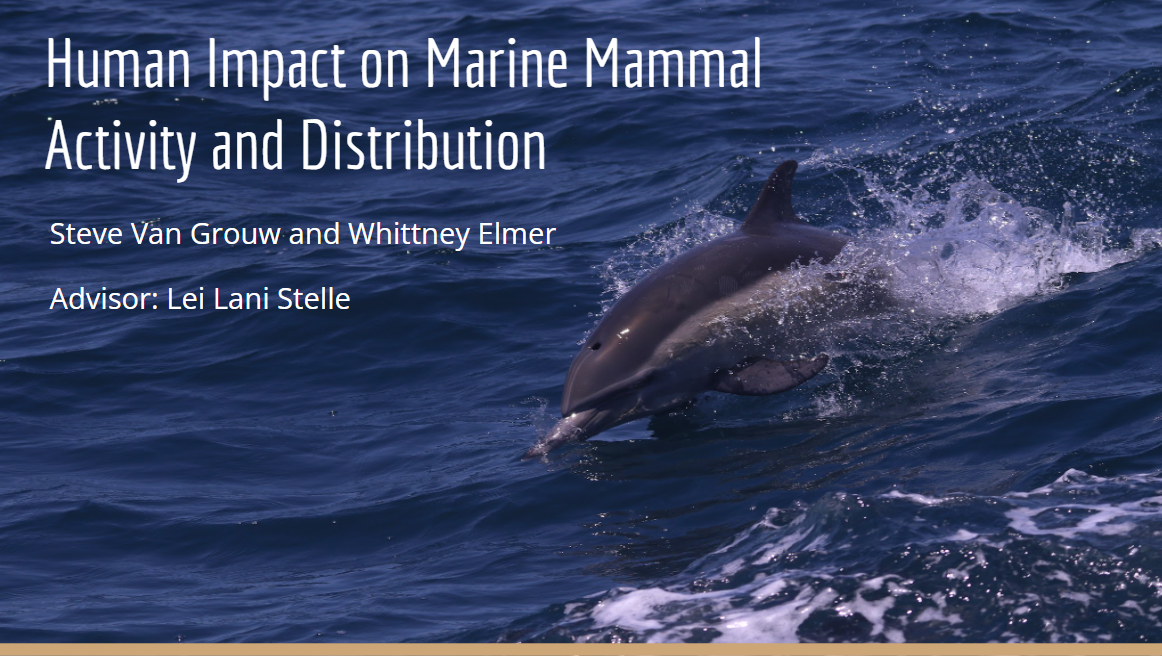
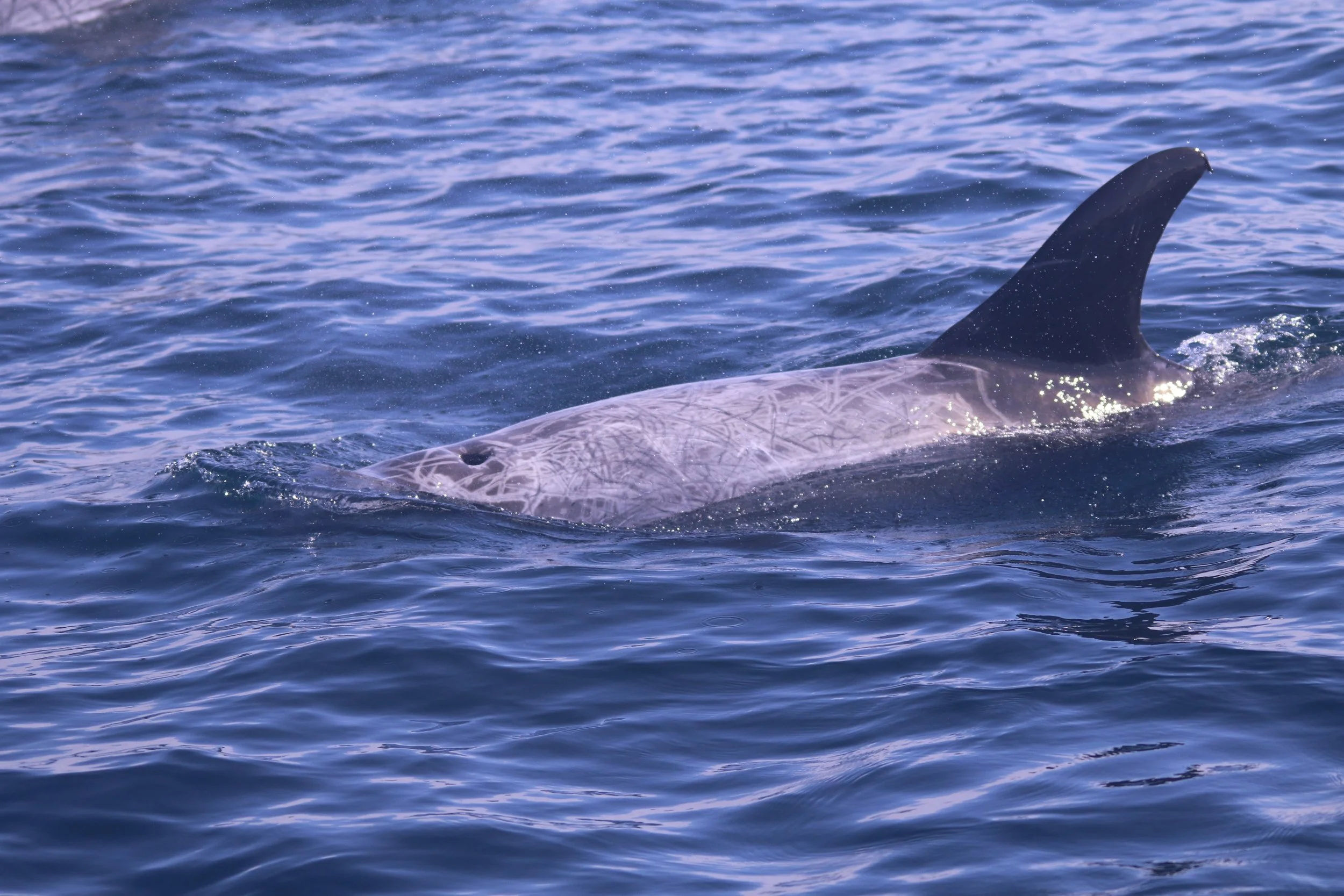
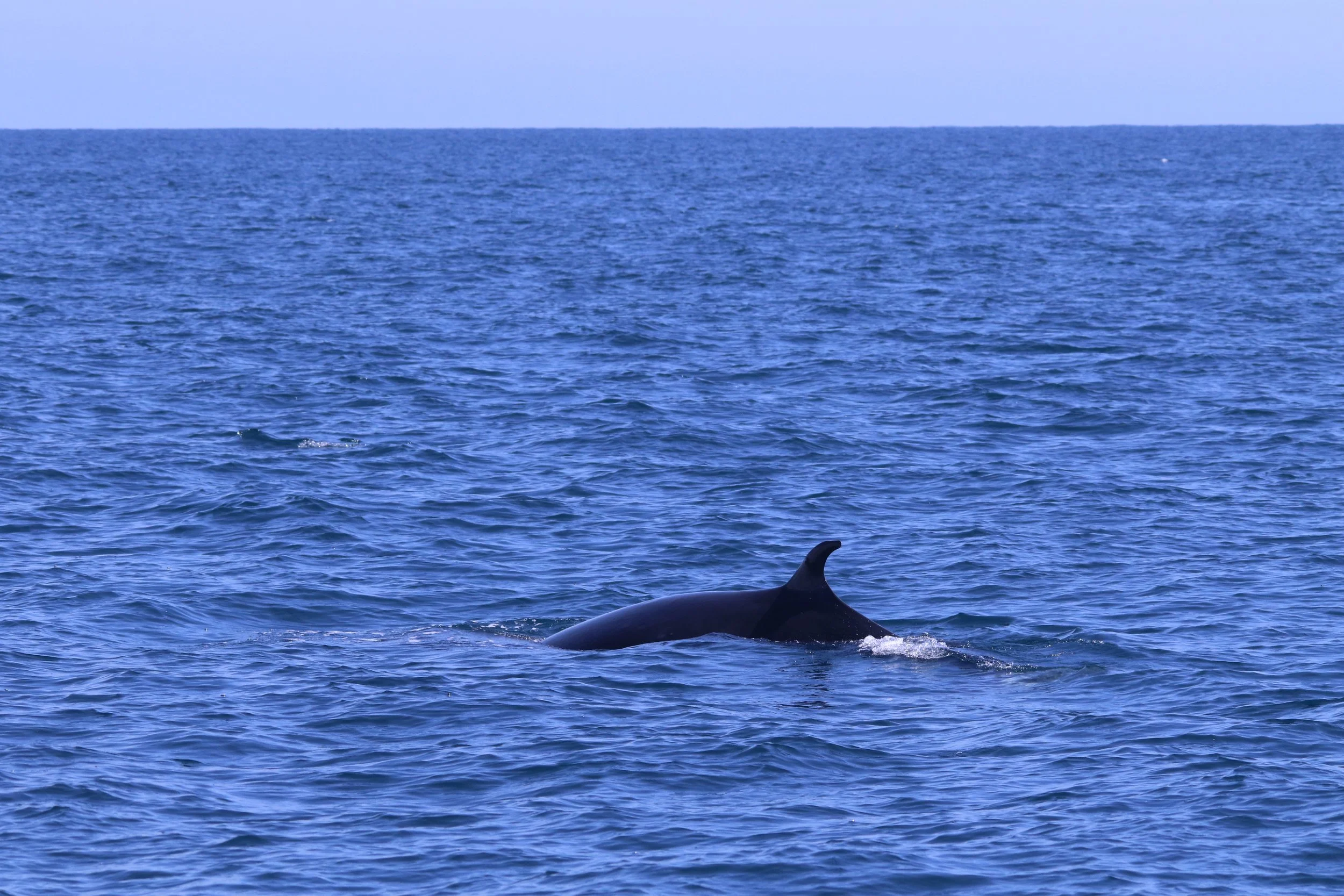
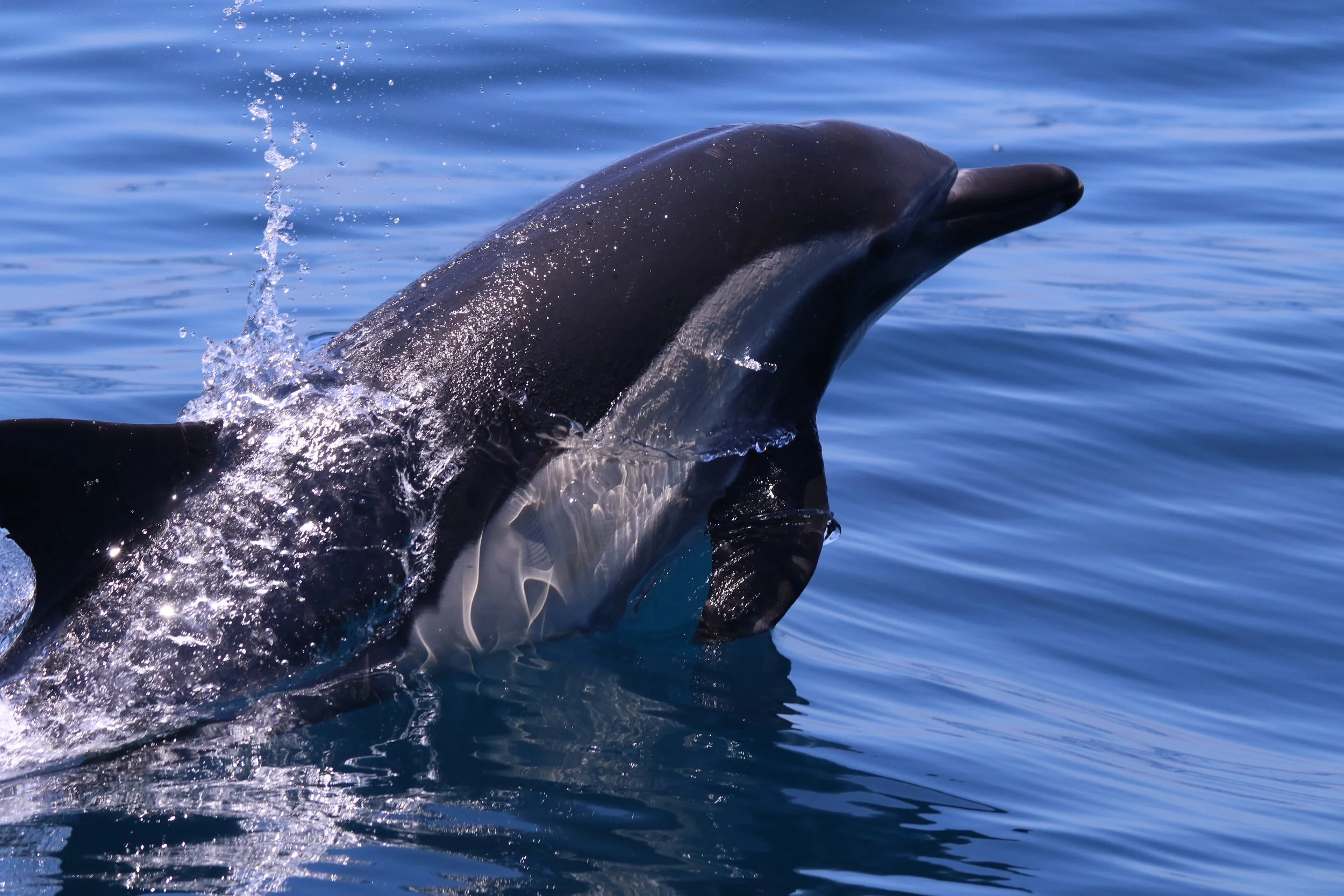
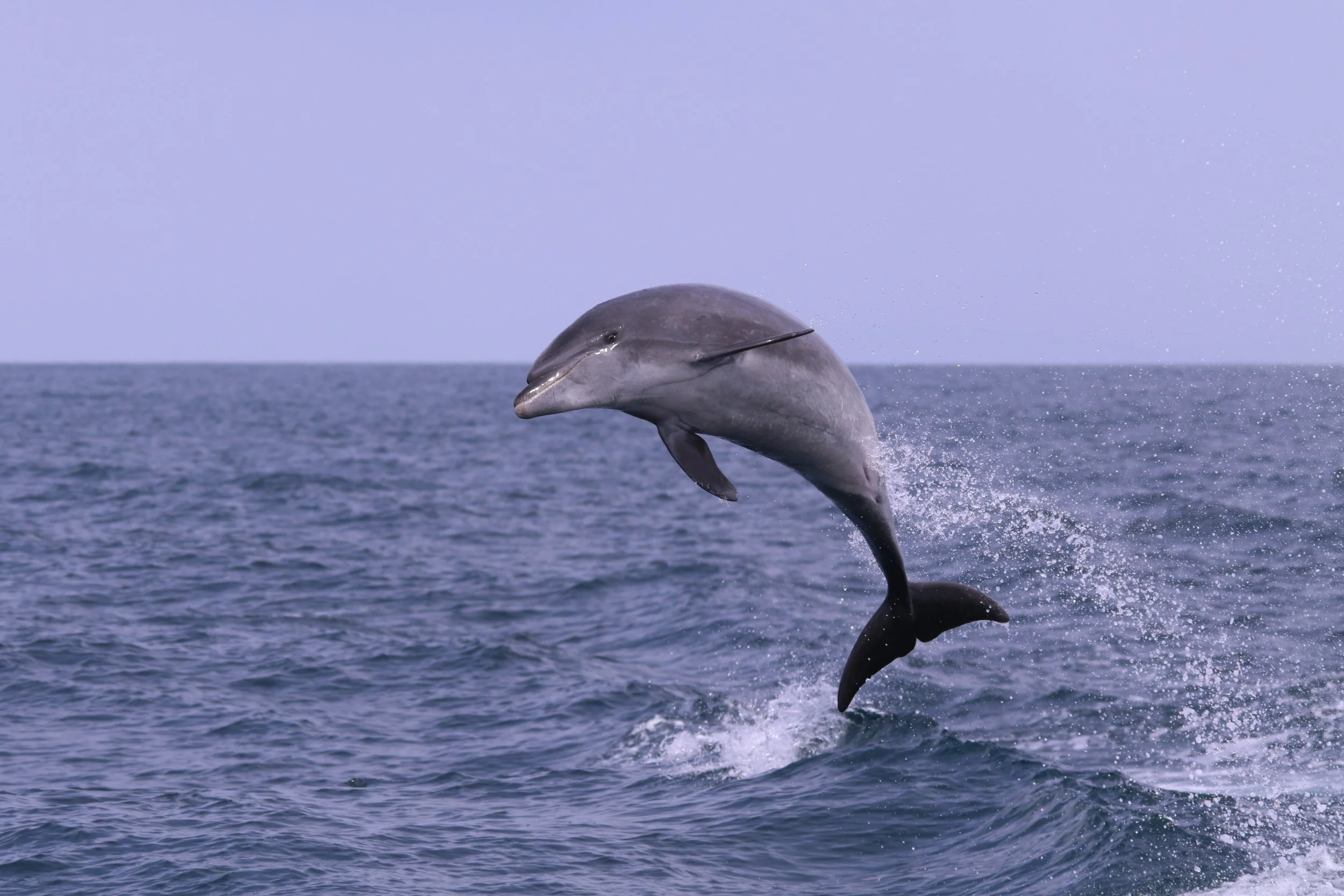
During the summer of 2019, I was lucky enough to be selected as one of the two research students to work alongside Dr. Stelle and continue the conduction of her marine mammal research. The research looked at the activity and distribution of marine mammal species and populations and how human activity such as recreation boating can affect marine mammal behavior. We collected data throughout the summer through the processes of photography for species identification, point data collection on collector for ArcGIS mapping, and minute-by-minute observation through spotting scopes. All three components of the research ran parallel and led to a project showcase to our peers, professors, the local Redlands community, and the donors to the Summer Stauffer fund.


Conservation Communication
In college, I took a course entitled Conservation Communication and it opened my eyes into an entirely new way (to me) about how we can communicate about science and the issues revolving around it. Instead of writing 10+ pages in a research paper with scientific vernacular that can often times be dense— I could be using visual media to create a sensory experience for learners. In my mind, it also made science more accessible to learn for folks who may not have chosen to learn science through traditional means of schooling and coursework. Through the course we went on a number of fieldtrips, from museums in San Bernardino to LA’s Natural History museum. We also we to Joshua Tree, Tahquitz Canyon, Oak Glenn Preserve, and the San Diego zoo— each with an assignment or question in mind. Unfortunately, I didn’t save much of my work so I have nothing more to show than my photo essay from Tahquitz Canyon and the outline that was created for our Joshua Tree Informational Video.


Voices of Redlands Instagram
During my first semester attending the University of Redlands and in an effort to find my footing and community on campus I started the Voices of Redlands Instagram with the guidance and support of an advisor. Unfortunately, the account was short-lived as I begin to tackle on college and other extracurriculars and the advisor who was an advocate and support on my behalf left UoR. Despite being short-lived the Voices of Redlands is a project that I was very proud to start and I often look back on those posts and am still surprised by the fondness I feel.

